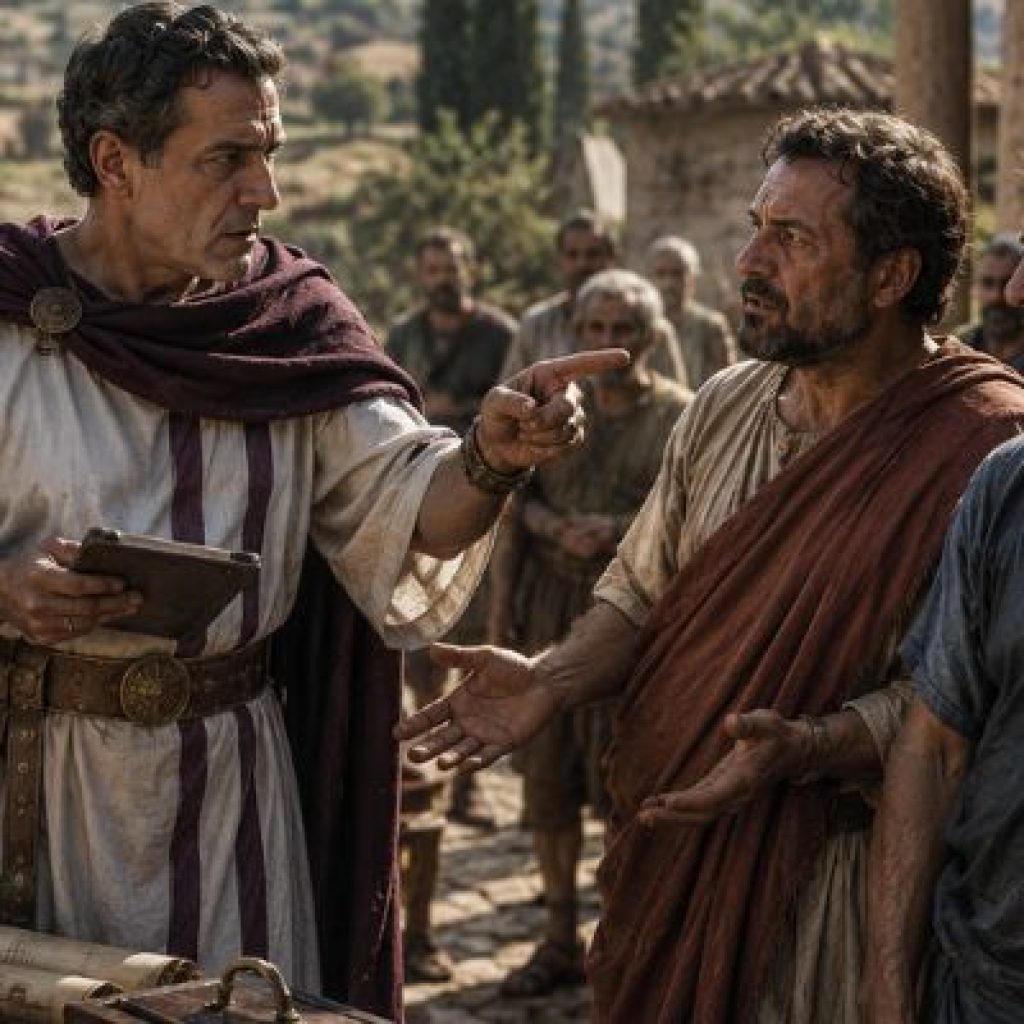
Rather than focusing on battles and decrees, this article examines what different groups feared most and how those fears shaped their decisions.
Introduction
By AD 238 the Roman Empire was experiencing military pressure, political uncertainty, financial strain, and weakening trust between institutions. People acted not only from ambition, but also from fear.
1. The Senate
The Senate feared becoming politically irrelevant, suffering reprisals from Maximinus if resistance failed, and losing its traditional role in selecting and advising emperors. Supporting the Gordians represented both risk and opportunity.
2. Provincial Governors
Governors feared being accused of disloyalty by either side. Delay could be interpreted as treason; swift commitment could prove disastrous if the wrong claimant prevailed.
3. Municipal Leaders and Landowners
City magistrates and wealthy landowners feared confiscation, impossible tax demands, and personal financial ruin. Their support for revolt often reflected desperation more than ideology.
4. Merchants and Traders
Commerce depended on predictable roads, safe seas, stable currency, and orderly government. Merchants feared civil war, interrupted trade, piracy, and declining confidence in the imperial economy.
5. Ordinary Citizens
Most Romans wanted stability. They feared higher taxes, food shortages, military requisitions, conscription, and violence reaching their homes. Their loyalty usually followed whichever authority seemed most likely to restore order.
6. Legionaries
Soldiers feared unpaid wages, uncertain succession, defeat on the frontier, and commanders who could not protect or reward them. Loyalty was often practical as well as personal.
7. The Praetorian Guard
The Guard feared backing the wrong emperor. Their influence depended upon surviving each political transition while preserving their privileged position in Rome.
8. Imperial Officials
Civil administrators and financial officers feared becoming scapegoats for unpopular policies. Many found themselves enforcing tax measures they did not create while facing hostility from the population.
9. Gordian I
For Gordian, the greatest fear may not have been death but responsibility. Accepting the purple meant risking his family, his province, and perhaps the Empire itself. Refusing it might also bring destruction if the revolt continued without him.
10. Maximinus
Maximinus likely feared losing the confidence of the army more than senatorial criticism. His policies suggest that preserving military loyalty became the overriding priority of his reign.
Conclusion
The crisis of AD 238 was not driven by fear alone, but fear shaped almost every important decision. Understanding those motivations allows historical fiction to portray participants as thoughtful human beings responding to extraordinary pressures rather than as simple heroes or villains.
Questions for the Novelist
• What information did each character actually possess?
• Which fear outweighed every other concern?
• How would incomplete or delayed news alter decisions?
• When did caution become impossible?
• At what point did loyalty give way to survival?
Why This Matters for the next book
Viewing AD 238 through the fears of different groups creates richer dialogue, more believable decisions, and greater dramatic tension. Readers need not know every historical detail to sense that each character is acting within a complex web of competing loyalties, limited information, and genuine uncertainty.
Portions of this article were developed with the assistance of ChatGPT, an AI model created by OpenAI.