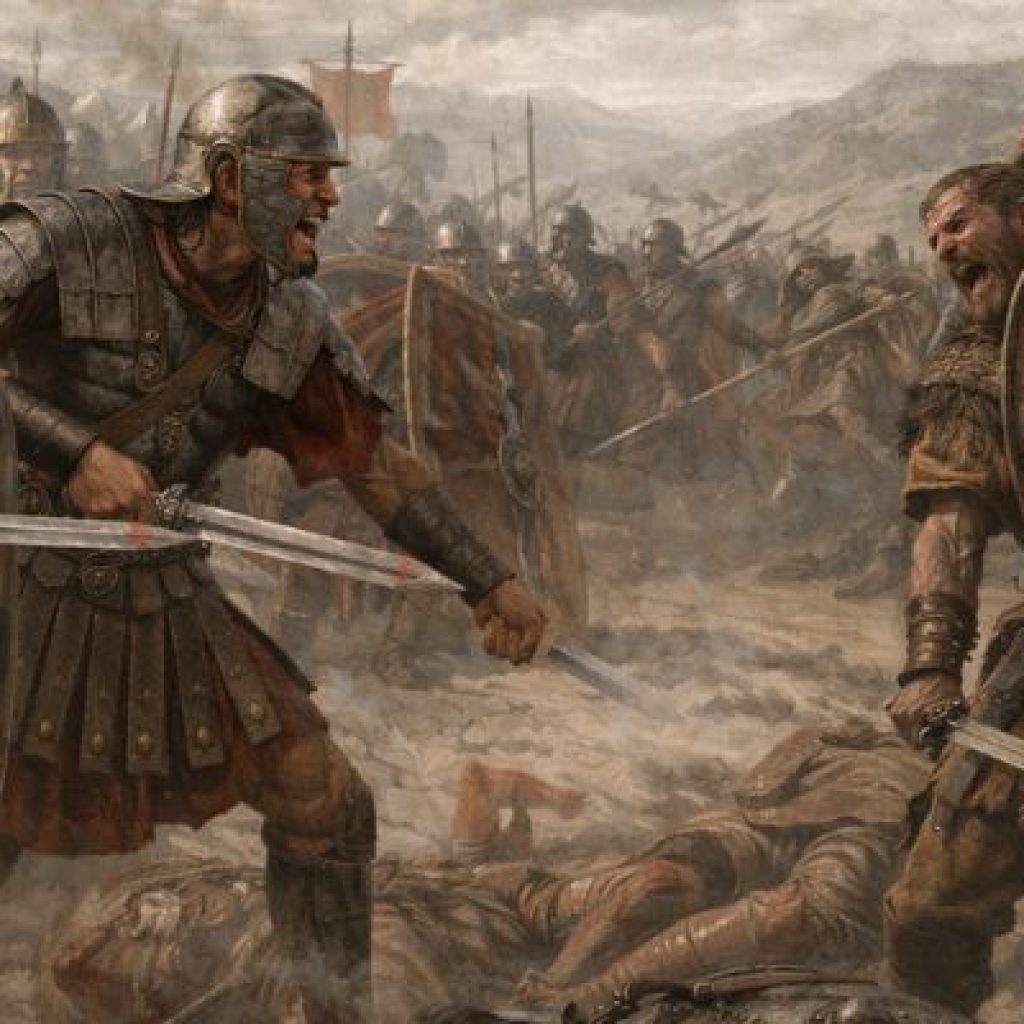
Imagine waking up in Rome in the year AD 250. The empire that once seemed eternal is wobbling like a table with a broken leg. Emperors don’t last long enough to have their faces carved into statues, armies are fighting as much among themselves as against barbarians, and the economy is collapsing under the weight of bad money and plague. Historians call this the Crisis of the Third Century, and it was the wildest rollercoaster Rome had ever ridden.
A Century in Chaos
The “crisis” stretched roughly from AD 235 to 284. In those fifty years, Rome went through more than twenty emperors, most of them soldiers who clawed their way to the throne only to be assassinated by the next ambitious commander. If you think modern politics is cutthroat, the 3rd century Roman version involved actual cutthroats.
Rome’s frontiers were under constant attack: the Goths and Alamanni pushed in from the north, while the resurgent Persians hammered the east. At the same time, plague (likely smallpox or measles) swept through the empire, shrinking the tax base and leaving the army short of men. Provinces broke away — the Gallic Empire in the west, the Palmyrene Empire in the east — leaving Rome like a parent trying to control rebellious teenagers on opposite ends of the house.
Why Did It Happen?
The crisis had several roots:
- Military overreach: Rome’s empire was enormous, and defending it stretched resources to the breaking point.
- Political instability: The army had grown too powerful. Generals could (and did) make or break emperors.
- Economic collapse: Endless wars drained the treasury. To cope, emperors debased the currency — mixing precious metals with base metals — which led to runaway inflation. A loaf of bread could cost hundreds of times more than it had just a few decades earlier.
- Plague: The Plague of Cyprian (AD 249–262) devastated the population. Fewer taxpayers meant less revenue, which meant less money to pay soldiers, which meant more mutinies.
Why It Matters
This period nearly broke the Roman Empire. In fact, many historians argue that the 3rd century marked the real beginning of Rome’s decline — centuries before the “fall” we all picture with Visigoths in 476. And yet, Rome didn’t vanish. Emperors like Gallienus (one of my favorites, for reasons you’ll see throughout this series) managed to patch things together, reform the army, and even win stunning victories against the odds.
Rome’s survival in the 3rd century shows both the resilience of its institutions and the fragility of power when leaders put ambition above stability.
My Writing Journey Connection
When I started writing about Emperor Gallienus, I realized the Crisis of the Third Century was the perfect setting for drama. Betrayals, sudden reversals of fortune, plagues, invasions — it reads like fiction, except it really happened. In my novels, Perilous Privilege and Solitary Journey, I try to capture the human side of this chaos: what it felt like for a man to wear the purple robe of power when every general around him was sharpening a dagger.
Reader’s Corner
What do you think would have been the hardest challenge for Rome to handle — foreign invasions, economic collapse, or the plague? Drop your thoughts in the comments — I’d love to hear your take!
This article was developed with the assistance of ChatGPT, an AI language model by OpenAI.