A Roman soldier might survive a battle and still lose the life he knew.
The cost of surviving
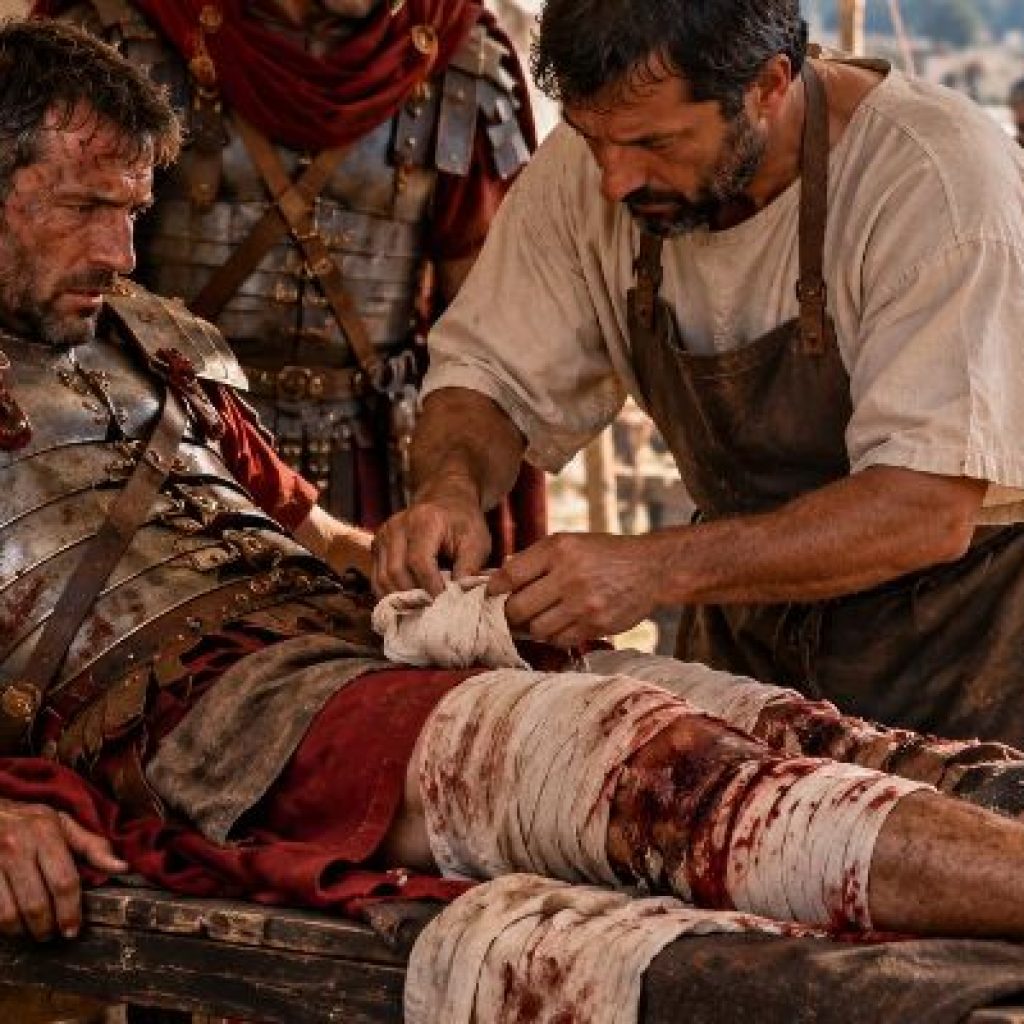
Roman military history often celebrates victories, discipline, and the men who marched beneath the standards. But what became of a legionary who survived a terrible wound, developed a disabling illness, or simply grew too old to carry on? For him, the end of fighting could mark the beginning of an entirely different struggle.
Treatment came first
The Roman army developed an organized approach to medical care. Military doctors and attendants treated injuries, and some forts maintained hospitals, known as valetudinaria. A soldier with a broken bone, an infected wound, or a serious illness might receive care rather than being immediately abandoned. Yet ancient medicine had limits. A shattered limb, permanent loss of mobility, or lingering illness could end a military career even when the patient survived.
Could he still serve?
Not every injury meant immediate discharge. A man who could no longer march in formation might still be useful in lighter duties, depending on his condition and the army’s needs. But Roman commanders had to consider whether a soldier remained fit for service. The decision was practical as well as personal: the army needed men capable of carrying out their assignments.
An honorable medical discharge
Roman military administration recognized discharge on medical grounds, often described as missio causaria. This differed from honorable completion of service (missio honesta) and dishonorable dismissal (missio ignominiosa). The categories mattered because discharge status could affect a veteran’s rights and benefits. But it would be misleading to assume that every medically discharged soldier automatically received a generous pension. Entitlements varied by period, type of service, and circumstances.
The promise—and uncertainty—of retirement
Men who completed their required service might receive retirement payments or other rewards, and veterans could enjoy legal privileges. Under the early empire, the military treasury helped finance discharge benefits. Yet a soldier forced out early by injury could face a less predictable future. By the troubled third century, warfare, inflation, and rapid changes of emperors added uncertainty to the value and reliability of military rewards.
What happened when he went home?
Some veterans returned to their families or settled in communities near the forts where they had served. A former soldier might farm, trade, or rely on relatives. Military friendships and connections could be valuable. For a man with a permanent disability, however, civilian work could be difficult, especially if he lacked savings, land, or family support. We have much less evidence about the day-to-day lives of these men than about famous commanders and battles.
A different kind of courage
Imagine a veteran who had survived years on the frontier but could no longer walk without help. The army had supplied his food, pay, comrades, and sense of purpose. Suddenly those familiar structures might be gone. His next challenge would not be defeating an enemy but finding a place in civilian society. Some undoubtedly succeeded; others must have struggled. The surviving sources do not allow us to measure how many experienced either outcome.
The men behind the victories
Roman military strength depended on ordinary soldiers who accepted extraordinary risks. We remember those who died in battle, but we should also remember those who survived with wounds that changed the rest of their lives. For them, the question was not simply whether Rome had won. It was what kind of future remained after the fighting ended.
What do you think was the greatest challenge for a Roman veteran returning to civilian life?
Frequently Asked Questions About Roman Military Veterans
What happened to Roman soldiers who could no longer fight?
Depending on their injuries and ability to serve, Roman soldiers might receive medical treatment, be assigned lighter duties, or be discharged from military service.
Did wounded Roman soldiers receive pensions?
Some Roman veterans qualified for retirement benefits, but medically discharged soldiers did not automatically receive the same rewards as men who completed their required service.
What was missio causaria?
Missio causaria was a form of Roman military discharge granted when a soldier could no longer serve because of a medical condition.
Portions of this work were developed with research and drafting support from ChatGPT (OpenAI).

 The Times of Israel